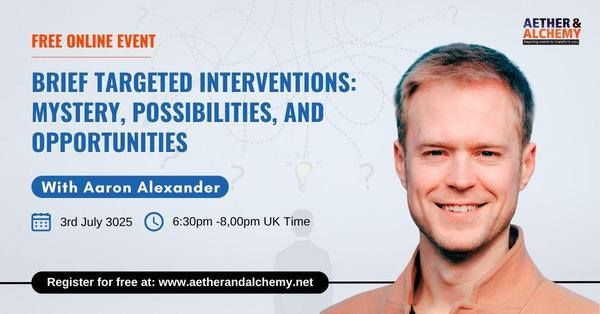
Register using the form on this page to join us for this free online event
Just Consider This for a Moment.....
What if a small change in thinking could suddenly improve outcomes or open new avenues for doing change work with ourselves and others?
In this presentation we will examine the trove of evidence suggesting that there has been a long history of practitioners using simple therapeutic tools who achieve strong results with clients surprisingly quickly—yet have been largely overlooked and misunderstood within the scientific paradigm of the 20th century.
We will cover various examples of effective brief interventions, the existing evidence about how and why they work, how they could be used in therapeutic and self-development work, and the results of in-depth interviews with standout practitioners of various brief interventions.
Who Should Attend? This event is perfect for you if you are:
- An existing change work practitioner who wants to discover the potential of brief targeted interventions
- Someone into personal development who wants to explore the possibilities
- Someone who is just curious about the area of change and effectiveness
Event Details:
- Date: 3rd July 2025
- Time: 6:30pm - 8:00pm (UK Time)
- Platform: Online via Zoom
Register for free below
ENTER YOUR DETAILS BELOW TO SECURE YOUR PLACE
All your details will be kept private. But note that as well as receiving registering to watch this webinar, we may also send future emails that contain information about events related to your interest in therapeutic change. However, your privacy is important to us and you will be able to UNSUBSCRIBE at any time.
Join us for this FREE event.
Thursday 3rd July 2025. 6:30pm - 8:00pm (UK Time)
join us to discover the evidence for, and potential of brief targeted interventions.
Find out more about your guide to this fascination topic - Aaron Alexander below:

ABOUT AARON ALEXANDER
Aaron Alexander is a speaker, researcher and practitioner who has a unique approach to psychology and mental health. His approach has appealed to many, including artists, scientists, and several of the top magicians, mentalists, hypnotists in the world who were looking for more authentic and magical ways to connect and create mind-bending experiences for their audiences.
Aaron draws on a diverse background including clinical counselling, youth work, addictions, restorative justice and mediation, as well as running a range personal and professional development programs. Aaron has assisted in creating novel psychiatric approaches to psychosomatic illness, psychological trauma, and difficult-to-treat patients in clinical settings, including research on how to improve and scale mental health intervention to meet the demands of the global mental health crisis.