A different way of understanding psychological suffering
Many approaches to personal change focus on managing symptoms, changing thoughts, or regulating emotions.
The Psychological Illusion Model (PIM) starts from a different place.
Rather than asking “How do we fix this experience?” it explores something more fundamental:
What if much of our psychological suffering is based on a misunderstanding of thought, identity, and the sense of self itself?
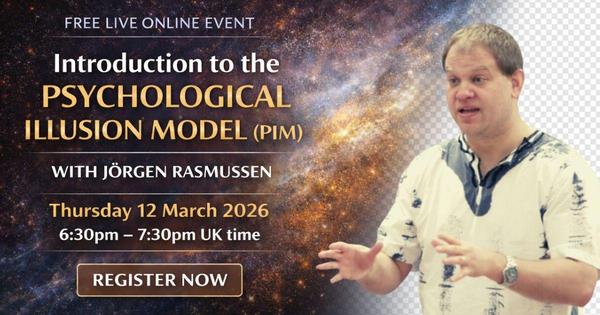
In this free live session, Jørgen Rasmussen introduces the core principles behind the Psychological Illusion Model and demonstrates how insight into the illusory nature of psychological experience can lead to meaningful and lasting change.
Developed through nearly three decades of client work, the Psychological Illusion Model reflects Jørgen’s distinctive approach to understanding human experience and facilitating change.
What is the Psychological Illusion Model?
The Psychological Illusion Model is a framework for understanding human experience that brings together:
Modern insights from psychology, hypnosis, and change work
Direct, experiential inquiry into thought, identity, and perception
A practical, non-dogmatic exploration of how the sense of “self” is created moment to moment
Rather than offering techniques or protocols, PIM points to something simpler and more radical:
When people clearly see how their experience is being created, suffering often reduces naturally, without effort or control.
What this session will explore
In this free online event, Jørgen Rasmussen will explain how much psychological suffering is not the result of people being broken or mentally ill, but often arises from innocently falling for basic psychological illusions.
When people misunderstand the nature of their own experience, distress can feel deeply personal and inescapable. Helping them see through these misunderstandings can make a profound difference.
Jørgen will also introduce how the Psychological Illusion Model effectively turns hypnosis upside down. Rather than reinforcing suggestion, it offers a way of helping people “de-hypnotise” themselves — seeing through the assumptions that keep anxiety, low mood, chronic pain, or trauma-related patterns in place.
Who Should Attend?
This session is especially relevant for therapists, coaches, counsellors, hypnotherapists, and other change-workers who want a deeper understanding of how psychological suffering is created and maintained. It will also appeal to those who are curious about approaches that go beyond techniques and symptom management, and who are interested in insight-based change, identity, and the nature of experience itself. No prior knowledge of the Psychological Illusion Model is required, just an openness to exploring a different way of understanding mind and change.